Event Recap: G.A.S. Critical Writing Workshop

Event Recap: G.A.S. Critical Writing Workshop

From March 25th to 27th 2026, G.A.S. Lagos hosted the inaugural edition of the G.A.S. Critical Writing Workshop, a three-day initiative designed to support the professional and critical development of emerging local art writers, researchers, and cultural practitioners. Through a series of workshops, readings, and lectures led by then-resident Olutomi Kassim, in collaboration with invited industry professionals, participants engaged deeply with the tools and methodologies of critical art writing. Each day brought together six selected participants to examine writing as a form of activism, encouraging them to ask questions, challenge dominant narratives, and engage with the social and political contexts that shape contemporary art.


On Wednesday, 25th March, the day focused on theoretical foundations and the realities of contemporary Nigeria, opening discussions around art as activism, its definitions, debates, and limitations. Participants engaged with postcolonial theory, decolonial aesthetics, cultural resistance, and postcolonial existentiality, grounding these frameworks within local contexts. Drawing from her practice as an artist, activist, and writer, Olutomi introduced a central question from her ongoing PhD research, Staging Activism: how might “soft power” activism generate solution-driven conversations on governance and social justice in postcolonial Nigeria and its diaspora? Sessions also examined research methodologies and socially engaged writing practices, prompting participants to consider when art becomes activism and how it can be critically written about. Responding to excerpts from Olutomi’s practice, participants developed a 200-word piece with a title and rationale on a chosen aspect of Nigerian art as activism. The day concluded with an exploration of the light writing of J. D. Okhai Ojeikere, using his photographic work as a basis for visual analysis and writing on site-specific pedagogies.


On Thursday, 26th March, the day began with an exploration of the literary concept of punctum, understood as the emotional and sensory response that generates personal meaning in interpretation. Participants reflected on how individual experience shapes perception and how a reader’s personal “agenda” informs engagement with a work. In the afternoon, Onome Amawhe, Senior Journalist at Business Day Nigeria, joined for a discussion on writing as activism from a journalistic perspective. He addressed ethical considerations in writing on Nigerian art, including scholarship publication, writing about sacred or restricted objects, intellectual property, artist voice, peer review, and the complexities of publishing from both Africa and the diaspora.

The day also included a close reading of Chinweizu’s The Truth-Teller, accompanied by a 100-word analytical writing exercise. Further discussions centred on decolonisation as a framework for challenging dominant constructions of national identity and postcolonial assumptions about Nigerian subjectivity. Participants examined decolonial pedagogy and art writing as knowledge production, considering how decolonial approaches reject universal Western epistemologies in favour of relational and embodied forms of knowledge-making. The group also engaged with Yoruba symbolism and the semiotics of embodied knowledge as practices of resistance and reclamation before concluding with a plenary reflection on dominant approaches to art writing.


On Friday, 27th March, the day opened with an exploration of agitational propaganda in literary form through the work of Wole Soyinka, focusing on his “Guerrilla Theatre” as a mode of oppositional literature. Participants examined its thematic concerns including prebendal politics, elitism, and religious critique, as well as its use of satire and absurdity to activate audiences and expose structural failures of state and elite power. A guest lecture by Oliver Enwonwu expanded the discussion into ethical and methodological considerations when writing about living artists and politically sensitive work.

This was followed by a writing lab in which participants applied these frameworks to a Business Day Nigeria-style article using MOWAA (Benin) as a case study, developing abstracts, structured arguments, and bibliographies while integrating visual evidence and scholarly conventions. Additional exercises included literature reviews, peer feedback, and revised abstracts toward a 1,000-word publishable article. The workshop concluded with a focus on critical writing methodologies drawn from Fela Kuti and Shrine traditions, positioning his practice as a methodological framework for art writing. .


ABOUT THE FACILITATORS

Olutomi Kassim


Olutomi Kassim is an academic researcher and interdisciplinary artist whose work explores art activism, storytelling, and cultural diplomacy as tools for social change. She has contributed scholarly chapters to several academic publications, including the Routledge Handbook for African Theatre Studies (2024). Her current research project, Staging Activism, examines how interdisciplinary performance art and cultural ambassadorship can stimulate dialogue around governance, memory, and justice in post-colonial Nigeria. Alongside her writing, Kassim produces textile artworks that embody themes of collective memory, political reflection, and social transformation.


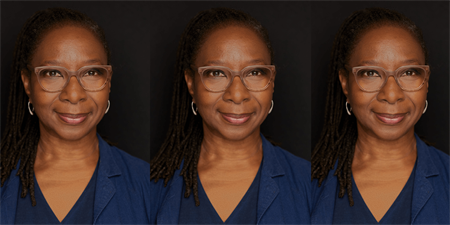
Photo of Olutomi Kassim. Image courtesy of Mountview Theatre School.


Oliver Enwonwu

Oliver Enwonwu FRSA, Fsna, CMC, FIMC is a third-generation artist; his grandfather was a reputable traditional sculptor, while his father, Professor Ben Enwonwu MBE, is celebrated as Africa’s pioneer modernist artist. In his paintings, Oliver explores liminal spaces, creating layered languages to nurture notions of freedom, decoloniality and interdependence through narratives of the body. With reverence for ancestral knowledge and our personal and collective histories, he draws upon autobiographical stories to challenge dominant narratives, imagine new futures and ultimately heal by leveraging the transformative power of art to foster mental wellbeing. In 2024, he was the first recipient of the Akoje Residency, Dumfries House, Scotland, organised through the King’s Foundation and The Akoje Foundation.

Enwonwu has over 20 years of experience as a curator, art administrator, author and publisher. His expertise also spans art advisory and programme management, as well as strategy and development. He is the founder, executive director, and a trustee of The Ben Enwonwu Foundation and sits on the board of the Lagos Biennial. The publisher of Omenka, Africa’s first art, business, and luxury-lifestyle magazine, he is a Fellow of the Royal Society of Arts, Institute of Management Consultants, and Society of Nigerian Artists, where he served as president from 2011 to 2021. Enwonwu is also a member of the British Art Network and the Folkestone Art Society.


Photo of Oliver Enwonwu. Image courtesy of V&A Academy.


Onome Amawhe

Onome Amawhe is a Nigerian journalist and writer based in Lagos, contributing to BusinessDay. His reporting spans business, economy, and current affairs, with a focus on industry developments, corporate leadership, and the evolving landscape of Nigeria’s creative and economic sectors. His work has also appeared in international and regional outlets, reflecting an interest in connecting local narratives to broader global conversations.

Photo of Onome Amawhe.


Olutomi's residency was generously supported by Deutsche Bank.


How You Can Support Our Foundation

Your generous contributions support the Foundation’s distinctive interdisciplinary residencies, research, education programmes and public events.