Earlier this month, we welcomed Yoma Emore, a multidisciplinary artist and a recipient of the G.A.S. Fellowship Award 2026, for a residency at G.A.S. Lagos. Based in Lagos, her artistic practice spans textiles, embroidery, hand-felting, and printmaking. Rooted in personal and collective memory, her work draws on familial archives and transnational histories to treat material as a living site where past narratives resurface and transform. Yoma also participated in the pilot edition of the Ìmòra Arts Intensive.
During her four-week residency, Yoma will continue developing The Prince Who Never Was, an ongoing project exploring early Portuguese presence in West Africa, transatlantic navigation, and the histories of the Itsekiri Kingdom within broader coastal histories. Drawing from resources at the G.A.S. Library and Picton Archive, alongside the library at Centre for Contemporary Art Lagos (CCA Lagos), she hopes to deepen the project through focused research, material exploration, and experimentation within her textile practice. The residency will also provide time for Yoma to experiment with embroidery and felting techniques using waste and leftover materials from previous bodies of work, allowing her to further expand the material and conceptual possibilities within her practice.
Yoma's residency is generously supported by Deutsche Bank. To find out more about supporting G.A.S. Foundation, click here.
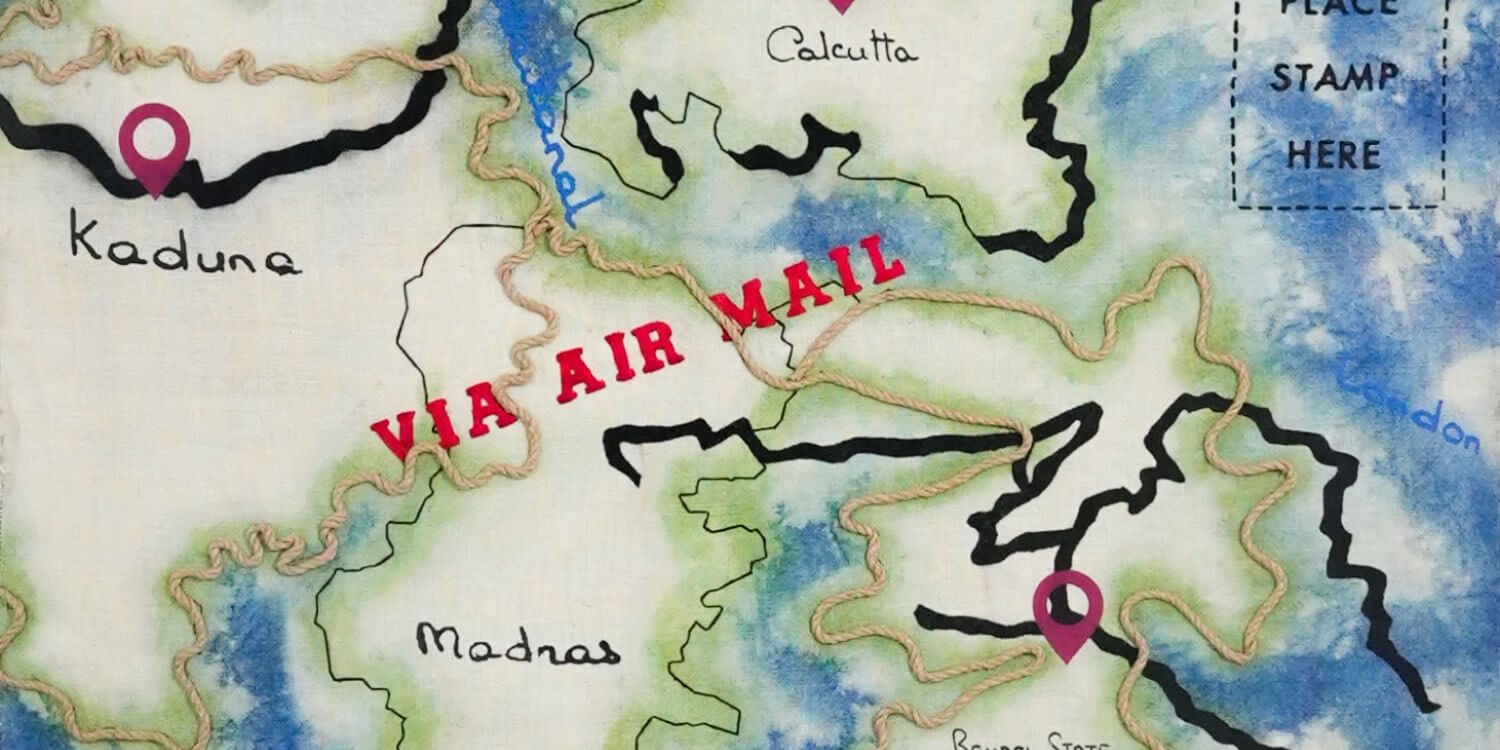 THE ADVENTURES OF LIZ CHOWDHURY (detail), 2025, fabric dye, screen print, acrylic and hand embroidery on jute, 47 1/2 x 60 in. Photo: Jeffrey Okwodu.
What is the current focus of your creative practice?
My practice explores personal and collective memory, lineage, and material history through research-led textile and material experimentation. I use archival research as a starting point and translate these ideas through material exploration. My current project, The Prince Who Never Was, traces my grandfather’s lineage back to 16th-century encounters between the Warri Kingdom and the Portuguese Empire. Drawing from personal and family archives alongside broader histories of early contact in West Africa, I explore how genealogy and memory can be expressed through textiles. The work develops through a dialogue of materials: velvet, historically associated with European trade and nobility, sits alongside hand-felted jute made from remnants of previous works. By reworking these fibres, I create continuity across bodies of work, forming a living archive in which materials carry traces of past narratives.
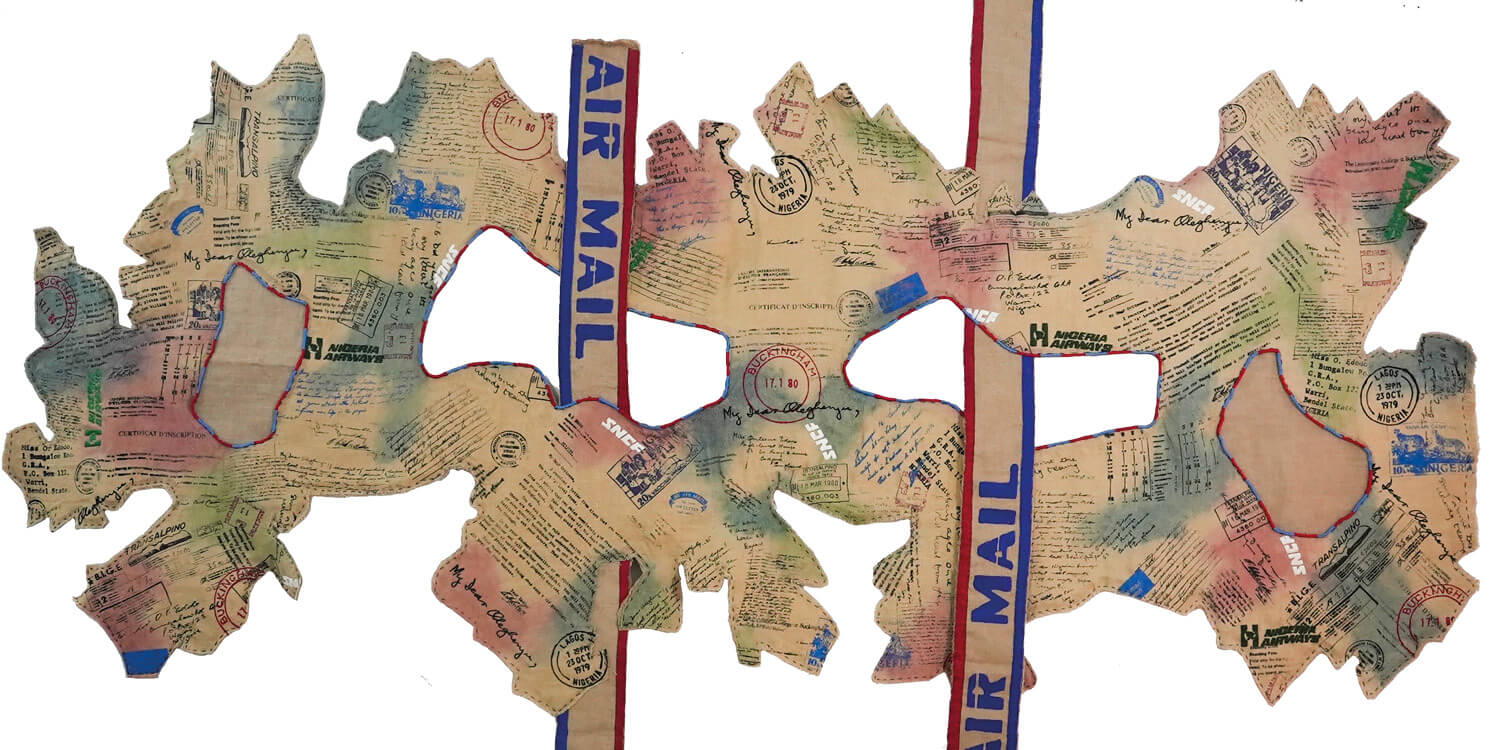 MY DEAR OLEGHENJU, 2024, fabric dye, screen print and hand embroidery on jute, 87 1/2 x 139 1/2 in. Photo: Jeffrey Okwodu.
What drew you to apply for this residency and how do you think it will inform your wider practice?
I was drawn to G.A.S. Foundation because of its strong emphasis on research, critical engagement, and process-driven practice. At this stage in my work, I am looking for an environment that supports both conceptual development and material experimentation. While my research is grounded in the Warri Kingdom and personal archives, being in Lagos offers a broader coastal context through which to consider histories of navigation, trade, and cultural exchange in West Africa. As a historic port city shaped by these movements, Lagos provides a living environment where these layered histories remain visible. This residency will allow me to situate my research within a physical context that reflects and extends my inquiries, supporting a deeper engagement with how personal and historical narratives intersect within material practice.
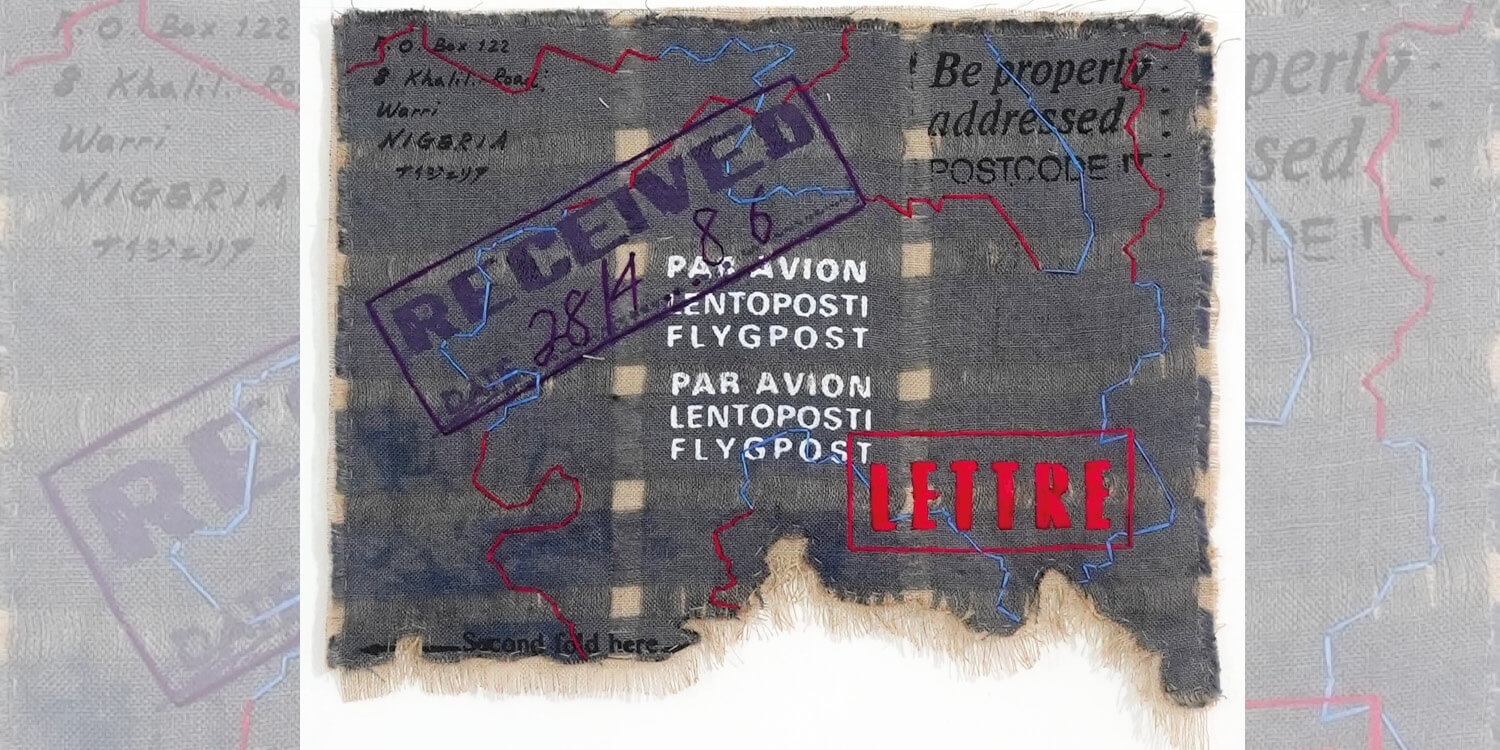 P.O BOX 122 (THE POST BOX CHRONICLES), 2024, fabric dye, screen print and hand embroidery on jute, 25 x 31 in. Photo: Jeffrey Okwodu.
Can you give us an insight into how you hope to use the opportunity?
During the residency, I intend to deepen both the research and material development of The Prince Who Never Was. Alongside this research, I will continue developing my textile experimentation, particularly through reprocessing waste materials from previous works using techniques such as hand-felting. This allows earlier bodies of work to re-emerge in new forms, creating continuity across my practice. By the end of the residency, I aim to produce a series of material studies and textile experiments that establish a strong conceptual and material foundation for the next phase of the project. I also hope to engage with researchers and institutions that focus on history, memory, and material culture.
RESIDENCY ARCHIVE
Event: Underwater Ave
Event Date: 30th May 2026
On 30th May, 2026 G.A.S. Lagos hosted Underwater Ave, an evening bringing together works in progress by then residents Kush Badhwar, Okwei Odili, Oluwasemilore Delano, and Yoma Emore. As their residencies came to a close, the artists shared unfinished ideas, footage, fragments, prototypes, tests, and experiments developed during their time at G.A.S.
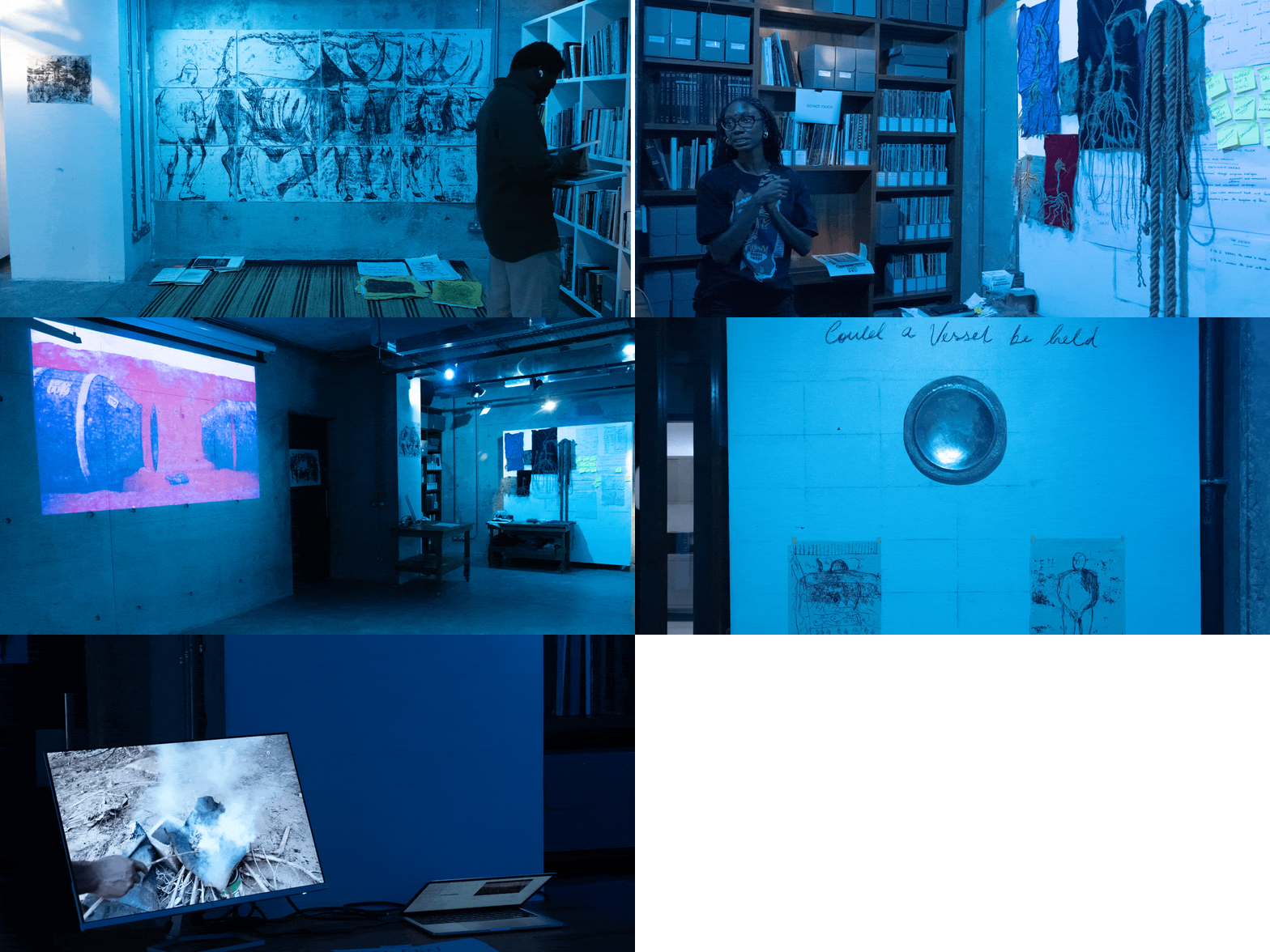 Installation view of works by Kush Badhwar, Okwei Odili, Oluwasemilore Delano and Yoma Emore.
Event: The Archive is Only the First Sentence
Event Date: 5th June 2026
On 5th June 2026, G.A.S. Lagos hosted The Archive is Only the First Sentence, an open studio and presentation of residency research by Yoma Emore. The session introduced the narrative and archival frameworks shaping her practice, alongside her ongoing project The Prince Who Never Was, which examines lineage and the early sixteenth-century Lusophone–Warri encounters in Nigeria.
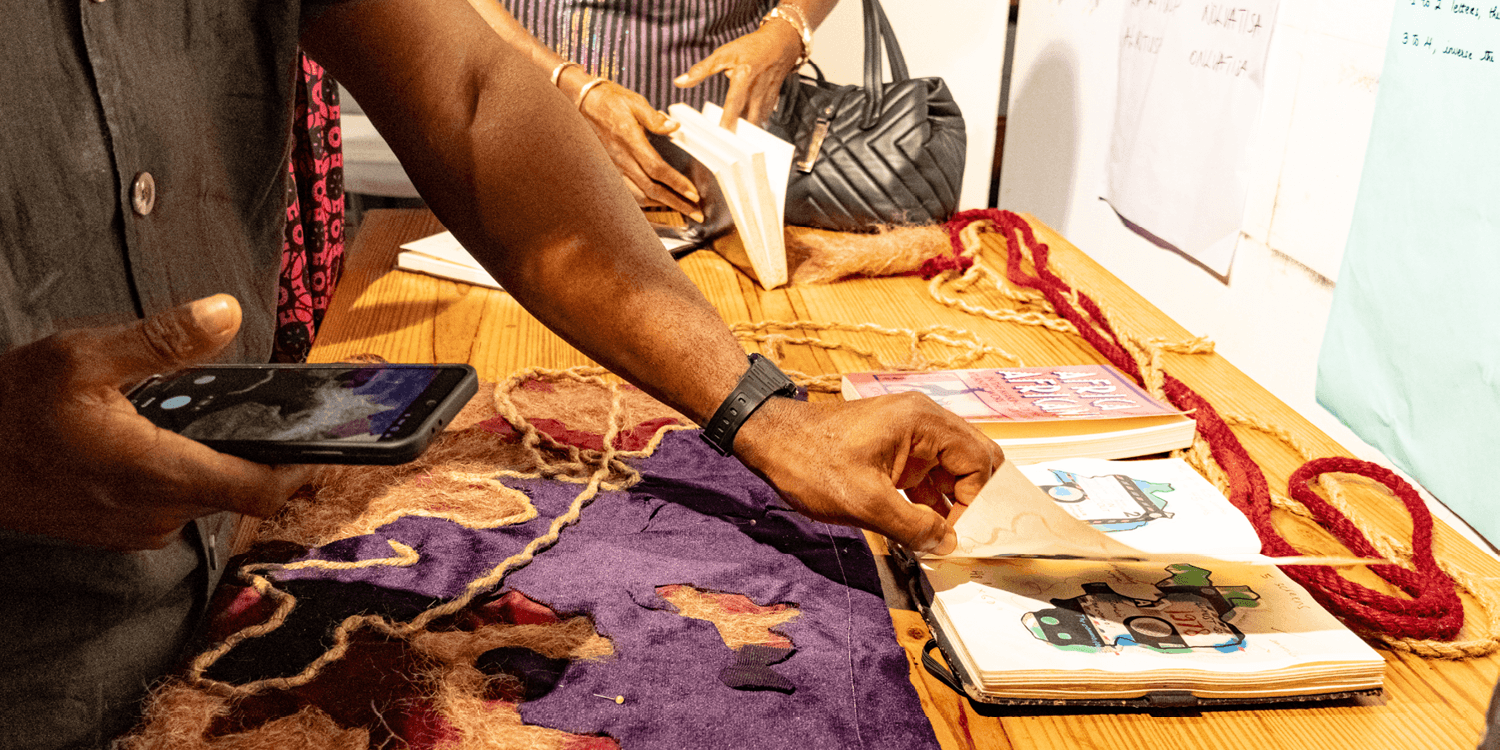 Guests viewing materials and process notes from Yoma Emore's residency research at G.A.S. Lagos.
About Yoma Emore
Yoma Emore (b. 1997, Nigeria) is a multidisciplinary artist whose practice explores personal and collective memory, lineage, and material history through research-led textile and material experimentation. With a background in fine art and visual studies, Emore engages with personal and collective histories, often centering familial archives as a means of interrogating the residues of displacement and transnational connection, and using processes such as embroidery, hand-felting, printmaking, and the reworking of waste materials. Across different bodies of work, Emore treats material as a site of continuity and transformation, allowing past narratives to resurface and shift through making. Her work has been exhibited internationally, including recent presentations in Los Angeles, Miami, and Lagos, where she continues to develop bodies of work that blur the boundaries between art, documentation, and speculative geography.
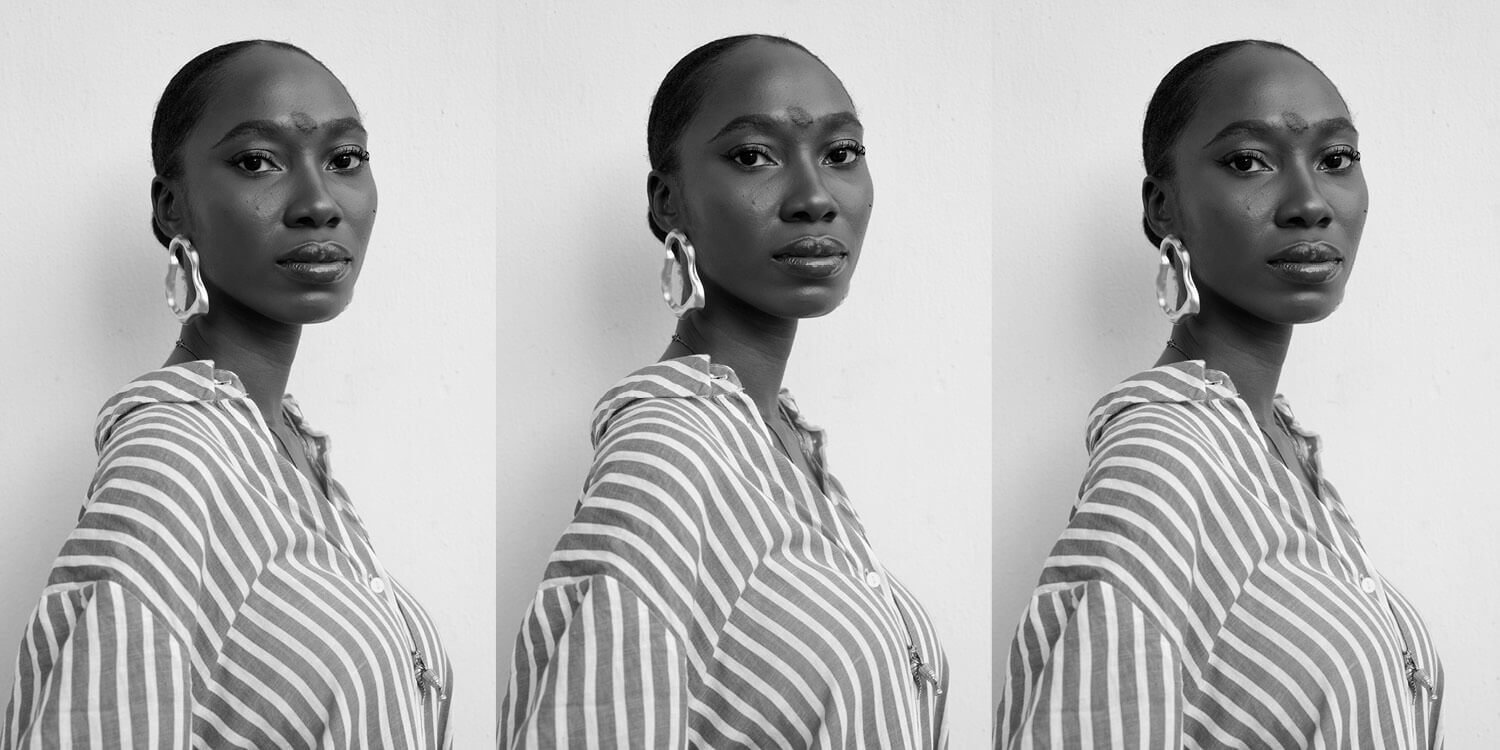 Photo of Yoma Emore. Photo: Jeffrey Okwodu.
Yoma's residency is generously supported by Deutsche Bank.